CurlQuest
A mobile app creating a more personalized experience for curly-haired users by providing tailored resources.
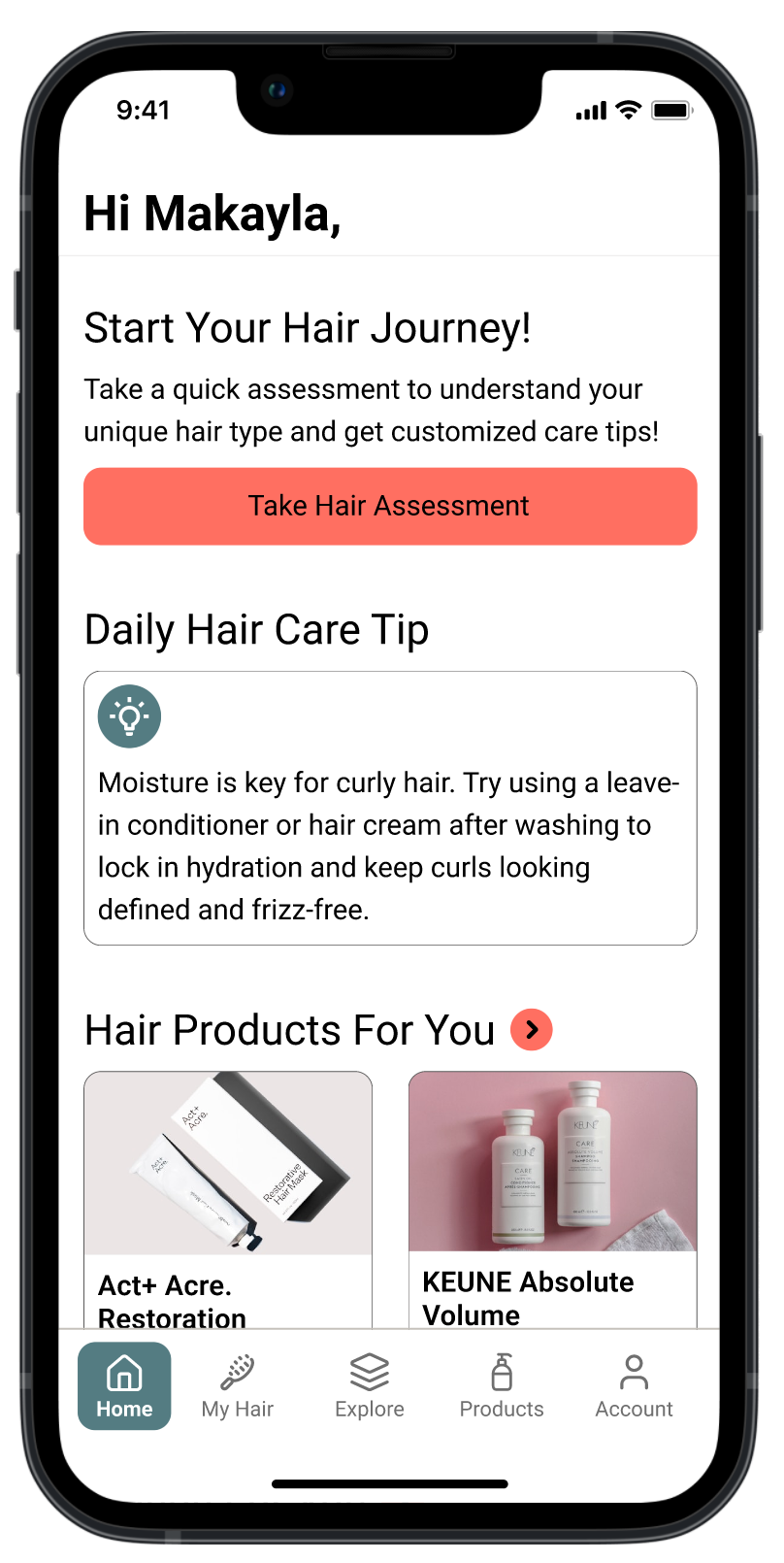
Overview
The curly hair community often struggles with finding reliable, tailored resources to care for their unique hair types. Many existing solutions offer one-size-fits-all advice, leading to frustration, trial-and-error, and wasted time and money. CurlQuest seeks to solve this by delivering a personalized app designed with proper resources to empower individuals with curly hair. Through features like a hair assessment quiz, curated tutorials, and product recommendations tailored to specific curl patterns, CurlQuest simplifies the curly hair journey.
Problem
Managing curly hair can be challenging, with a lack of guidance in navigating diverse hair types and finding the best products tailored to individual needs. The market has historically catered more toward straight hair, leaving many curly-haired individuals relying on varied advice from influencers or facing trial and error. CurlQuest aims to address these challenges by offering personalized solutions and simplifying the journey to embracing and caring for natural curls.
Role
Sole UX/UI Designer and Researcher
Tools
Figma, Google Suites
Timeline
July - December 2024
Solution
CurlQuest is a personalized app designed to empower individuals with curly hair by offering tailored hair care solutions. Through features like a hair assessment quiz, curated tutorials, and product recommendations, the app simplifies the curly hair journey while fostering a space for education and exploration. With an emphasis on user-friendly design and interactive elements, CurlQuest provides resources to help users embrace and care for their natural curls confidently.
Discovery
Secondary Research
To gain a deeper understanding of the challenges faced by individuals with curly hair, I conducted secondary research. This research revealed key insights, such as the underrepresentation of curly hair in traditional beauty markets, the overwhelming variety of of products with unclear suitability for specific hair types, and the growing influence of curly hair communities and influencers in shaping buying decisions. These findings helped me identify gaps in the market and informed the app's focus on personalized solutions and education.
Primary Research
Survey
After gaining a general understanding of the challenges curly-haired individuals face, I wanted to gain firsthand insights directly from potential users. I conducted a 10-minute survey because it’s an efficient way to gather meaningful data with high participation rates. The goal was to explore 1) their current hair care routines and frustrations, 2) how they find products or tutorials that meet their needs, and 3) their budget considerations when purchasing hair care products. I created and distributed a screener survey using Google Forms to target individuals with curly hair through my personal network. I received 17 responses, which helped refine my understanding of user pain points and informed the app’s key features.

Jobs To Be Done (JTBD)
To ensure CurlQuest met the real needs of its users, I applied the Jobs To Be Done (JTBD) framework to focus on motivations, goals, and expected outcomes. By focusing on these JTBD, CurlQuest was designed to address real pain points while empowering users to confidently care for and celebrate their natural curls. Here are the key JTBD that guided my design:
When I am looking for products that repair and maintain the health of my curls I want access to reliable and accurate information about products that improve hair health so I can embrace my natural beauty and enjoy having healthy curls.
When I want to stay within a budget while caring for my curly hair I want to find affordable hair care products that are effective for my hair type/curl pattern So I can manage my curly hair without overspending.
When I am starting my natural hair and/or curly hair journey after years of heat styling I want to find supportive resources and guidance for transitioning to natural curly hair so I can embrace my natural beauty and feel proud.
Competitive Analysis
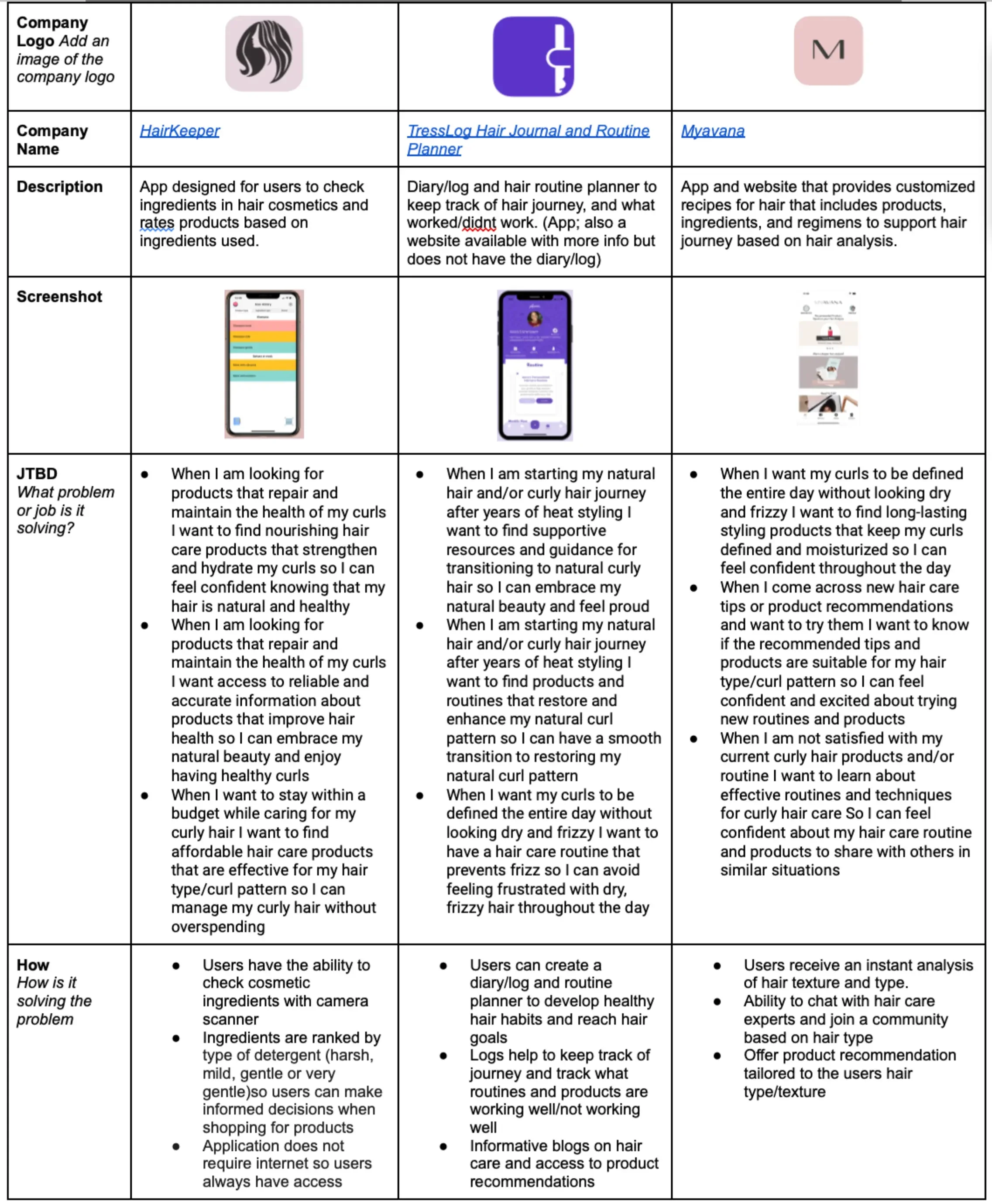
To better understand what curly hair apps are available and what are the gaps in the market, I conducted a competitive analysis. This analysis helped differentiate CurlQuest and identify potential user pain points. I researched competitors like HairKeeper, Treslog Hair Journal, and Myavana which cater to curly-haired individuals but focus on product ingredients or having a tracker for how users take care of their hair. While these platforms provide useful content, they lack personalization and integrated tools for product recommendations or tutorial discovery. I aimed to improve upon these gaps by creating a seamless, user-centered experience that combines product discovery, tutorials, and budget-friendly solutions in one app.
Ideation
Problem Statements (HMWs)
Synthesizing insights from research, I created five high priority How Might We (HMW) statements to guide my design process. I wrote the HMW statements from the user’s perspective by identifying the most significant challenges they face and the solutions they would value most. These highlighted opportunities to improve hair care experiences for curly-haired individuals by addressing their frustrations, empowering healthier practices, and providing accessible, tailored solutions.
How might we support individuals to have healthier and stronger hair to improve hair health and build confidence?
How might we provide users with the right advice and products for their specific hair type to reduce overwhelm and uncertainty?
How might we make it easier to find effective products tailored to an individual's hair type or curl pattern to avoid frustration and overspending?
How might we find products that have moisturizing properties and effective frizz control so curly-haired individuals can embrace their natural hair?
How might we help curly-haired individuals find affordable products with natural ingredients to balance quality and cost?
Ideation
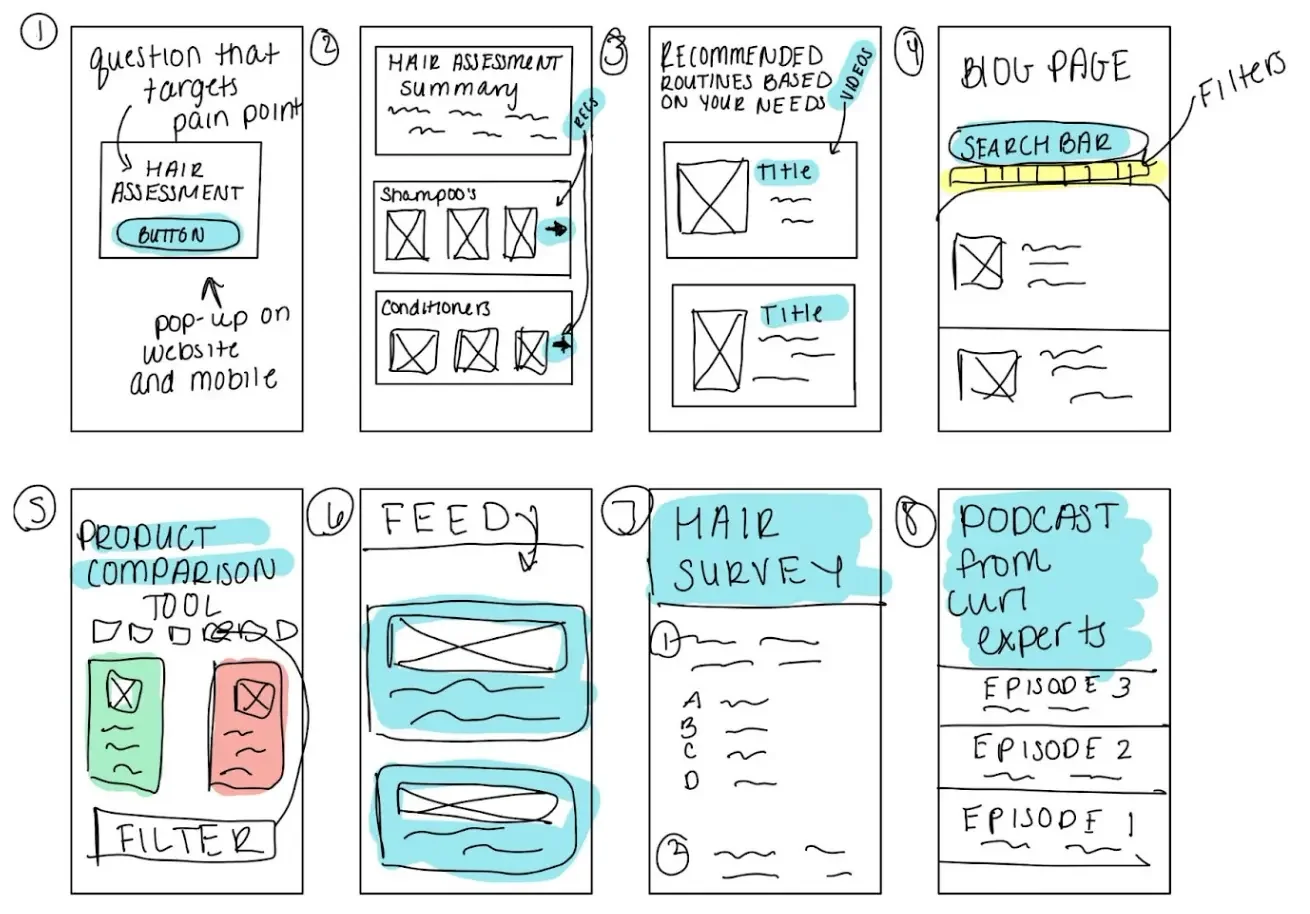
When ideating, I brainstormed solutions to the HMW statements using the Crazy 8 method. I used this method to freelycreate a range of potential solutions without the pressure of designing the "perfect" one. The HMW statements guided my ideas to ensure I addressed key user challenges and stayed aligned with the project goals. By sketching freely and quickly, I avoided overthinking and allowed diverse concepts to emerge. This process provided a strong foundation for refining solutions in later stages. Some initial ideas included tailored product recommendations, user feed, and a product comparison tool.
User Stories
To ensure the app addressed the most critical user needs, I created user stories that reflected the high-priority features required for the MVP (Minimum Viable Product). These stories were informed by insights from my research, allowing me to empathize with users and pinpoint their main pain points and desires. The user stories served as a blueprint for designing the app’s key functionalities and guided the development of a solution that directly tackled the challenges of curly hair care. For example:
As a user,
I want to log in so that I can personalize my experience with the app.
I want access to information about my hair type/curl pattern so that I can know the best way to take care of my hair.
I want to see curly hair routines based on my hair type/curl pattern so that I can feel confident in taking care of and doing my hair.
I want a complete list of product recommendations for my hair type/curl pattern so that I can buy the correct products for my hair.
I want to see product comparisons so that I can easily find the right products for my hair.
Site Map
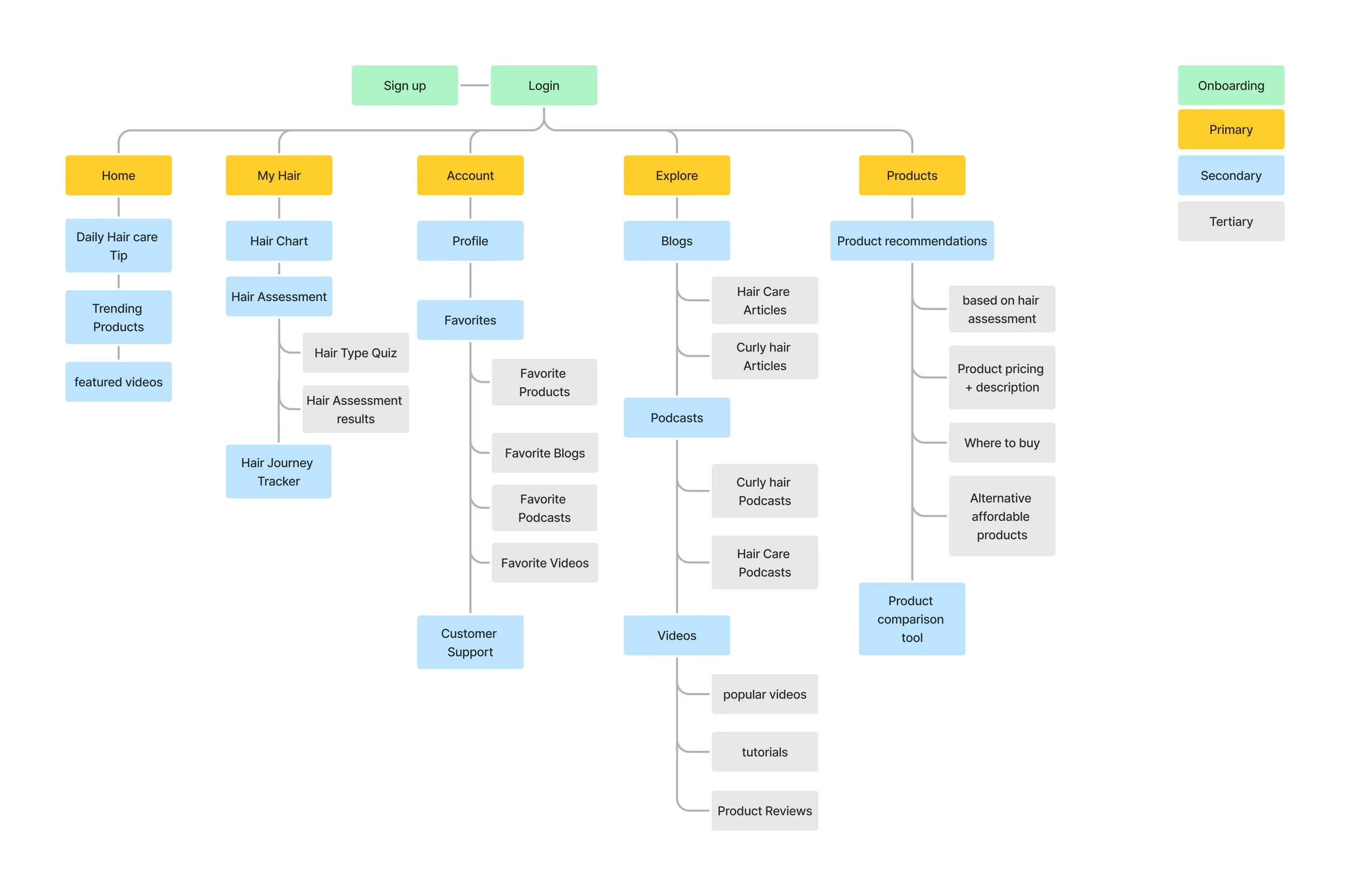
Creating the site map was an important step in organizing the structure and content of the app. This provided a clear, bird’s-eye view of how different sections and features connected, ensuring the app’s information architecture would be intuitive for users. By visually mapping out the app, I was able to identify logical groupings and prioritize features, laying the foundation for a seamless experience. The site map also became a key reference point as I moved into wire framing and design, helping to maintain consistency and clarity throughout the design process.
User Flows
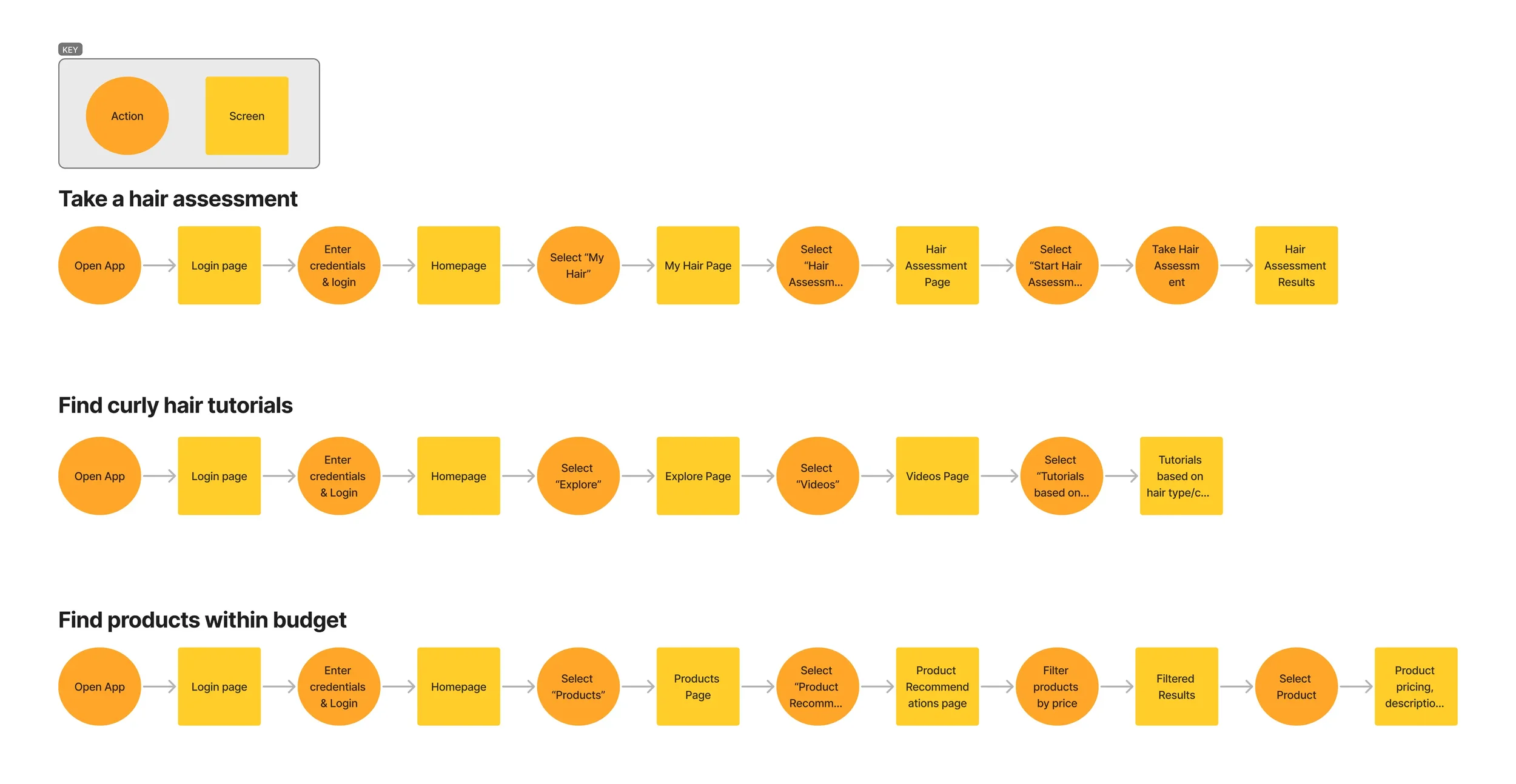
After completing the site map, I developed three user flows that showcase the core functions of the app, ensuring users can accomplish their goals with ease. These flows demonstrate how users can navigate the app’s structure and achieve specific outcomes while maintaining a user-centered approach.
Flow 1: Take a hair assessment. This flow emphasizes the app’s mission to support healthier hair journeys by providing the user with an opportunity to better understand their current hair health and state.
Flow 2: Find curly hair tutorials. This highlights the app’s ability to provide targeted educational content that empowers users to care for their curls confidently.
Flow 3: Find products within my budget. This flow focuses on helping users discover hair products that fit their budget, addressing a key pain point for many curly-haired individuals and ensuring accessibility to effective solutions.
Sketching
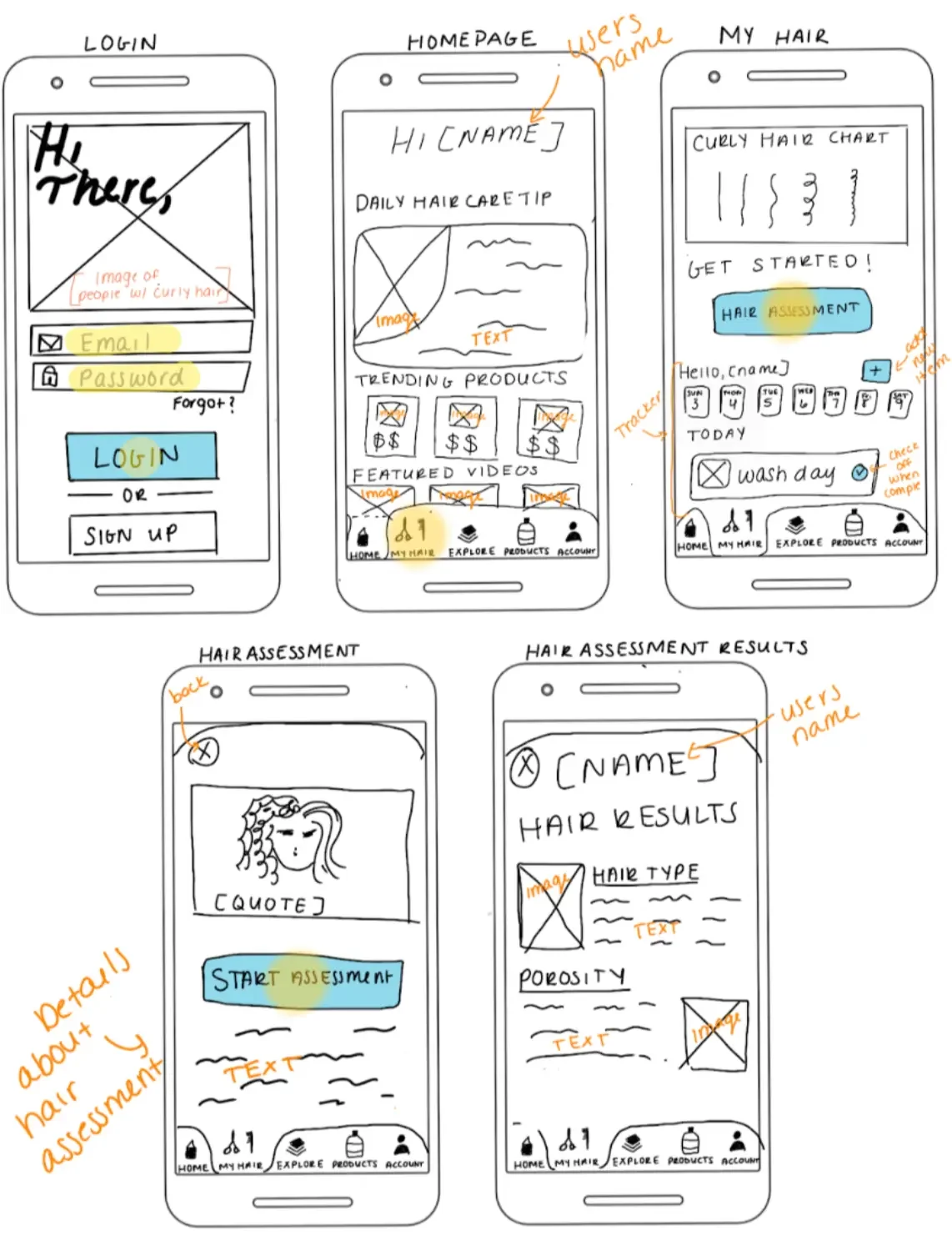
It was time to bring the userflows to life! I translated them into sketches to visualize how users would interact with the app and ensure the pathways were clear and intuitive. This process helped me identify opportunities to simplify navigation and refine the overall design. These sketches served as the foundation for creating wireframes, inspiring the layout and structure while maintaining a user-centered approach.
Design
Wireframes
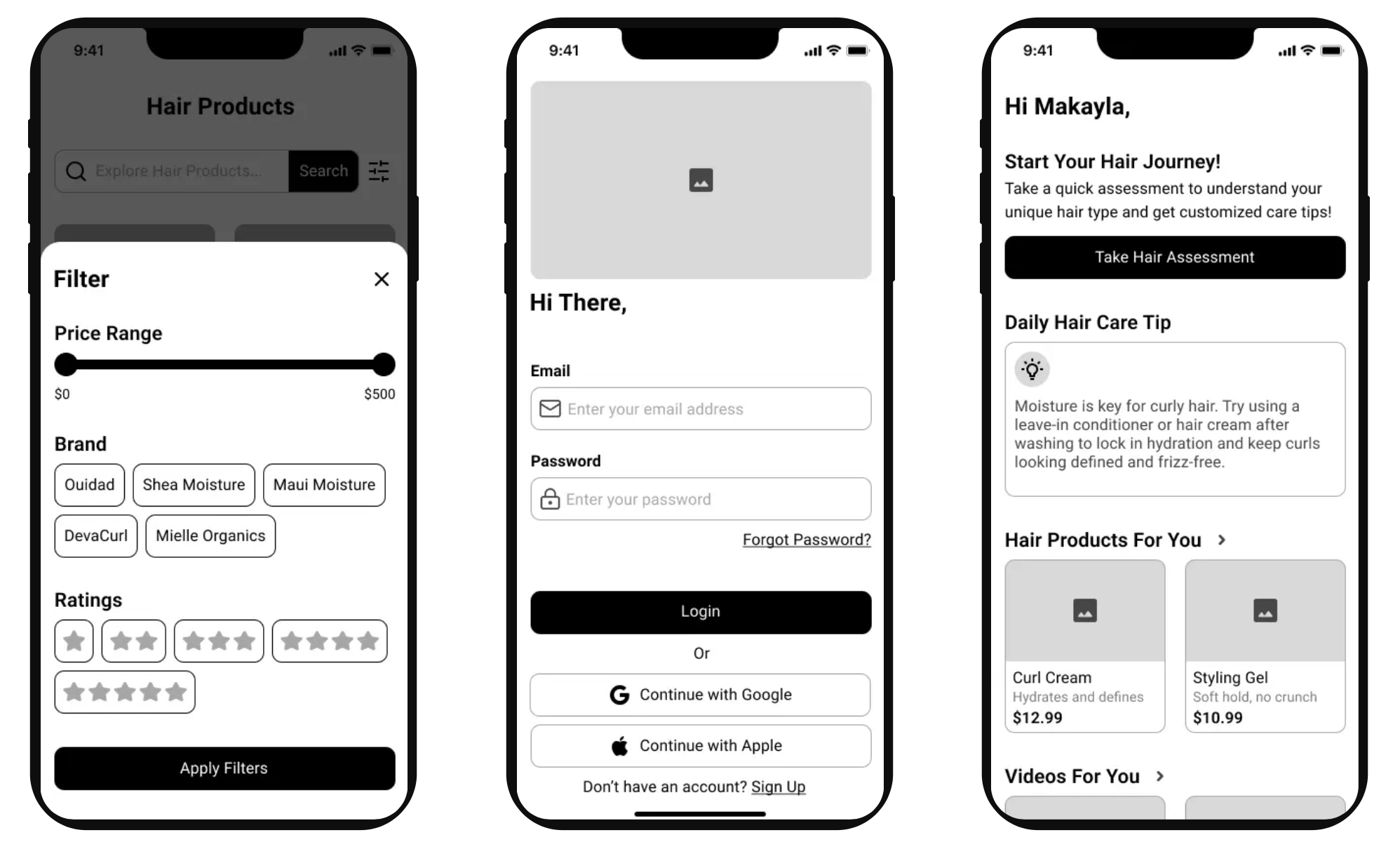
I transformed my sketches into wireframes, using the iterative process to refine the design and enhance usability. Starting with low-fidelity wireframes, I focused on layout, spacing, and the overall structure while keeping the design simple and functional.
As I transitioned to medium-fidelity, I added real text, labels, and images, which allowed me to identify ways to make the userflows smoother and more intuitive. For instance, I reorganized the “Hair Assessment Results” screen to prioritize actionable insights, making it easier for users to interpret their results and take the next steps. Each iteration brought me closer to a user-friendly design that met the needs of curly-haired individuals effectively.
Moodboard
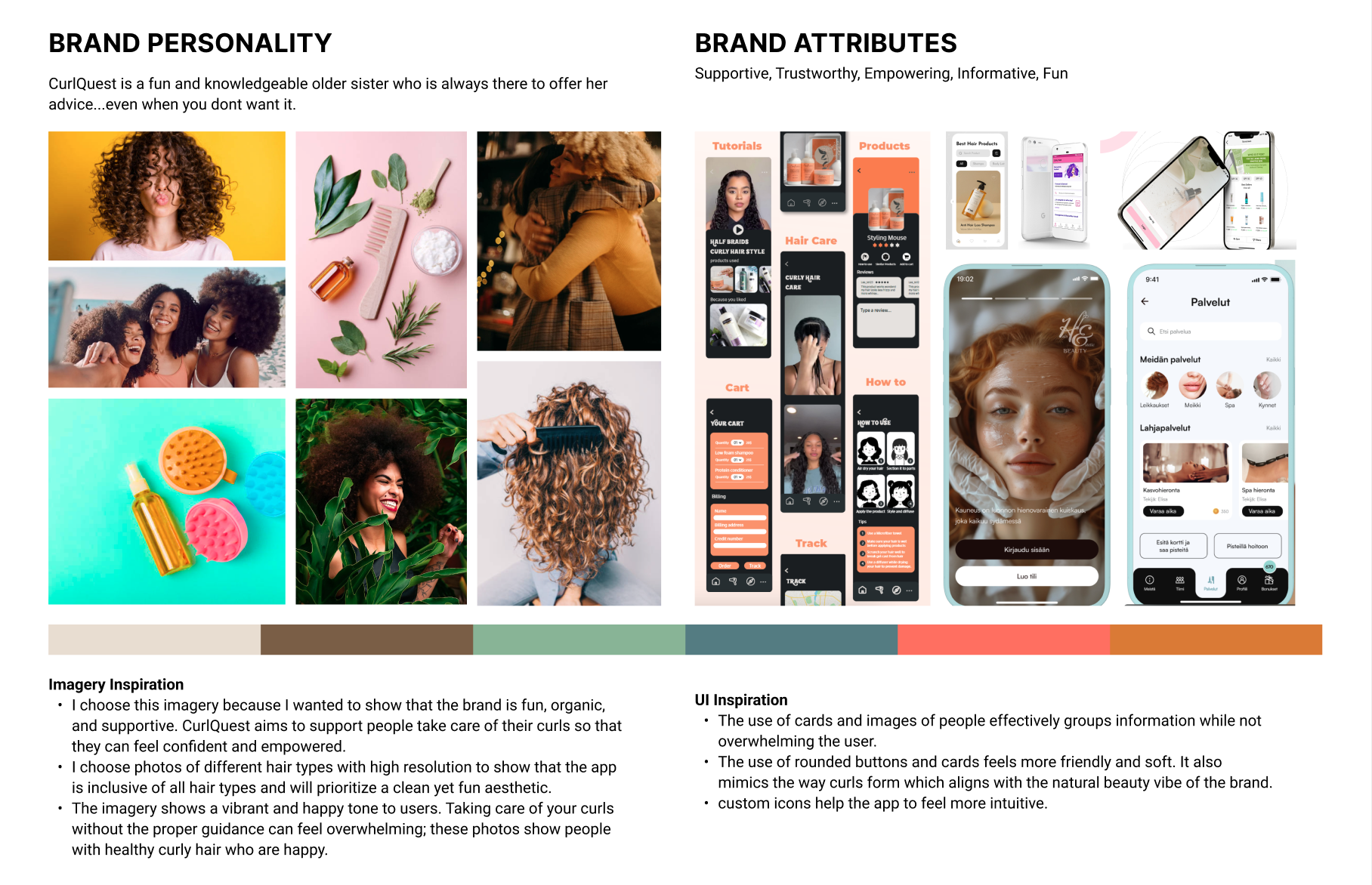
To create a personality for the app, I created a mood board and brand identity. I chose the name CurlQuest because it reflects the purpose of the app - a digital space where people can start their Curl Quest with proper resources and recommendations that are unique to their hair type/curl pattern. I chose the images because they were playful and vibrant to match the way having curly hair can feel. The UI reflects the clean aesthetic I was aiming for so that the app feels easy to use with pops of color.
Style Guide
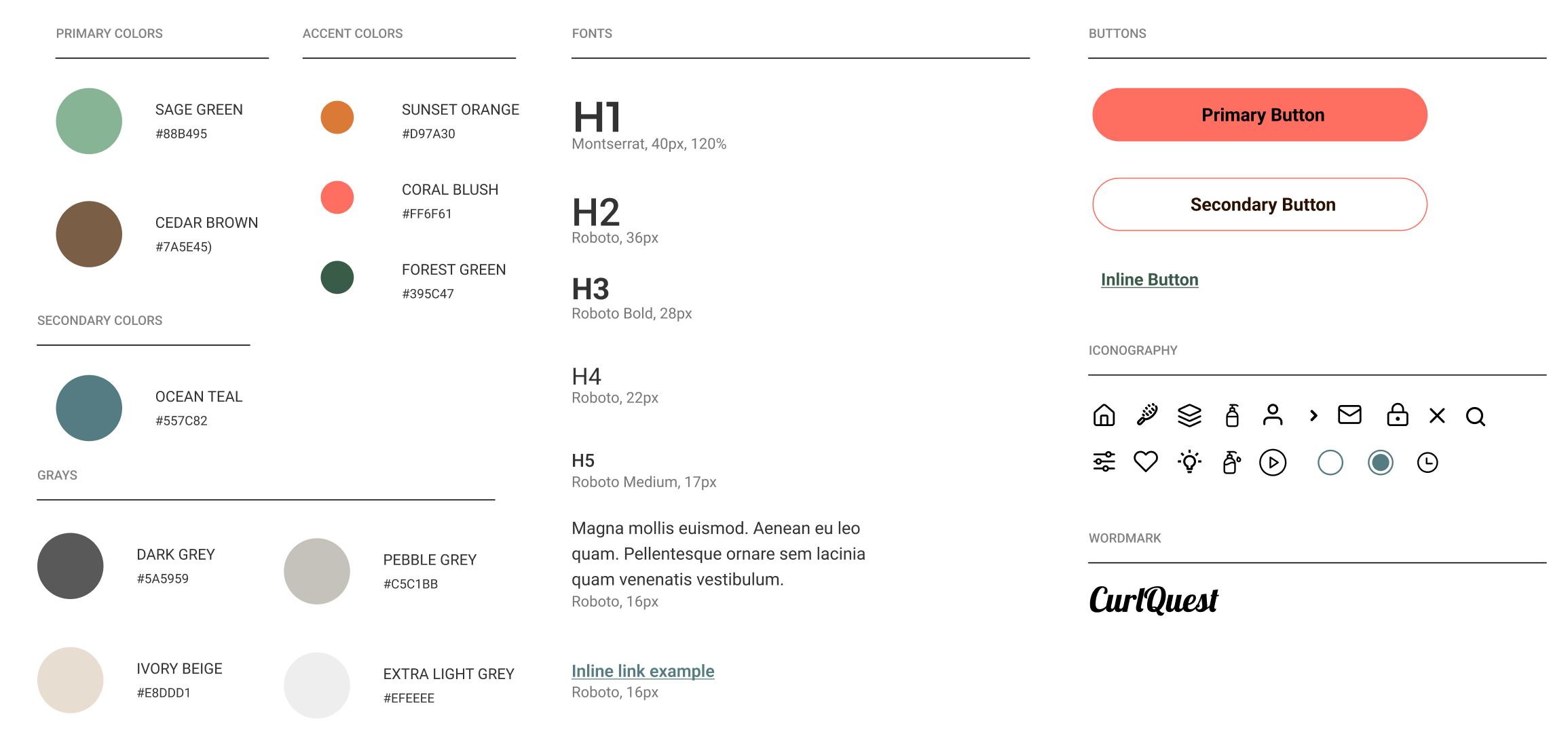
Creating a style guide was crucial for ensuring consistency and cohesiveness. For typography, I selected Roboto for its clean, modern, and highly readable aesthetic, a familiar choice that aligns with industry standards. When choosing colors, I aimed for a palette that embodies the vibrancy and warmth of curly hair while maintaining a clean design. Drawing inspiration from photos in my mood board, I used a color palette generator to find colors that contrast well. The ocean teal creates a calmness and reflects the unpredictability of curls (oceans are unpredictable!), while the coral accent adds energy and excitement, symbolizing the start of a new journey or quest. Together, these elements create a visual identity that resonates with the overall vibe/personality of the app and its users.
High Fidelity Screens
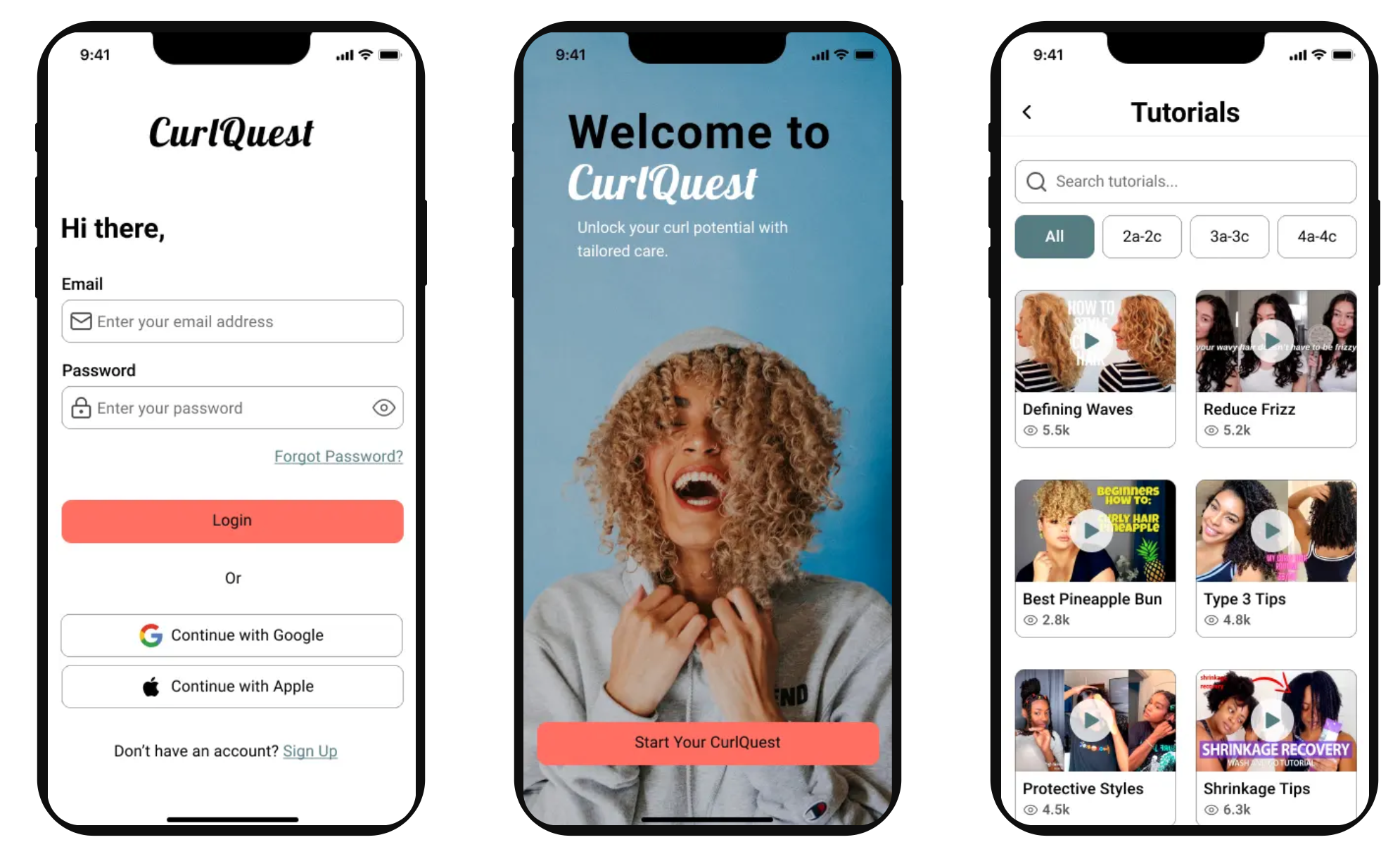
Designing the high-fidelity mockups for CurlQuest was an iterative process that brought the app’s personality and functionality to life. I focused on refining the visual design to align with the brand’s mission of empowering users with curly hair while ensuring the interface was intuitive and accessible. The ocean teal and coral accent colors were incorporated to maintain a sense of vibrancy and warmth, creating a welcoming aesthetic. Attention to detail in layout adjustments, white space, and navigation ensured the design felt clean and user-friendly without overwhelming users. Icons, imagery, and typography choices were carefully selected to celebrate curly hair and reflect the app's playful yet professional tone. These iterations were informed by earlier design decisions and usability goals, resulting in a polished final design that captures CurlQuest’s brand while prioritizing the user experience.
Prototype
I used Figma to build an interactive prototype of CurlQuest, focusing on the app’s three core user flows. This step was important for visualizing how the screens connected and how users would navigate the app when completing the three user flows. By prototyping, I could test and refine the transitions, interactions, and overall user experience. Seeing the flows in action helped me identify areas where the design could be simplified or made more intuitive.
Testing
Usability Testing
To ensure CurlQuest’s design was user-friendly and met the needs of the target audience, I conducted usability testing with five participants via remote sessions on Google Meets. The objectives were to evaluate the app's ease of navigation and functionality and identify any usability issues in completing key tasks, such as completing a hair assessment, finding tutorials, and accessing product details. Participants were recruited through my personal network to ensure feedback was relevant and insightful.
Findings
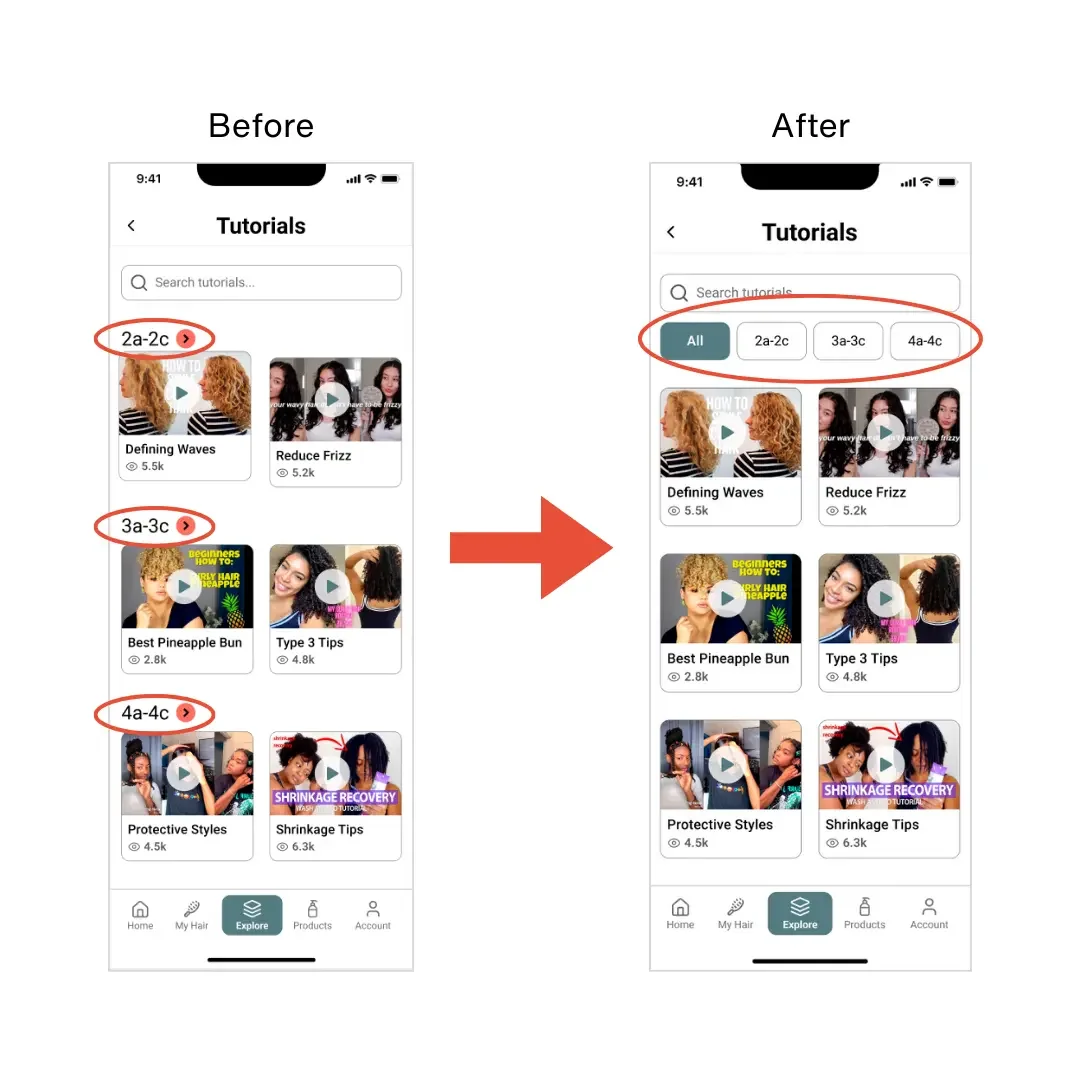
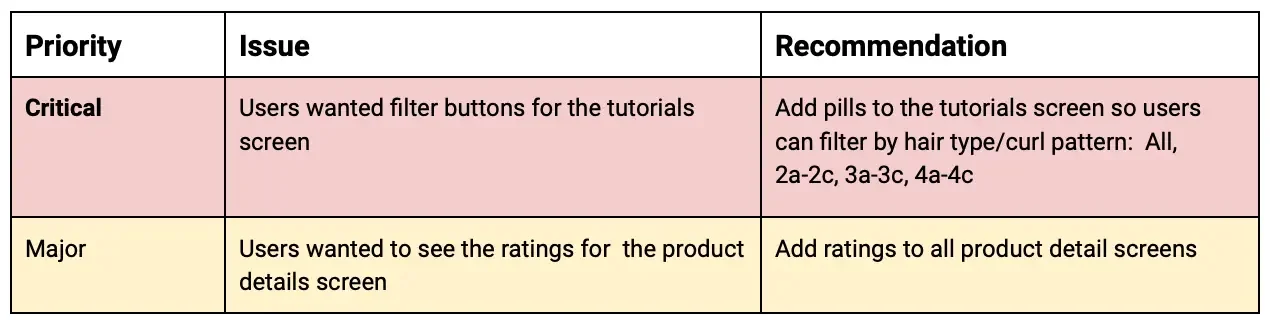
Tutorials Page: Users expressed the need for a filter feature to sort tutorials based on hair type/curl pattern, noting that it would improve their experience.
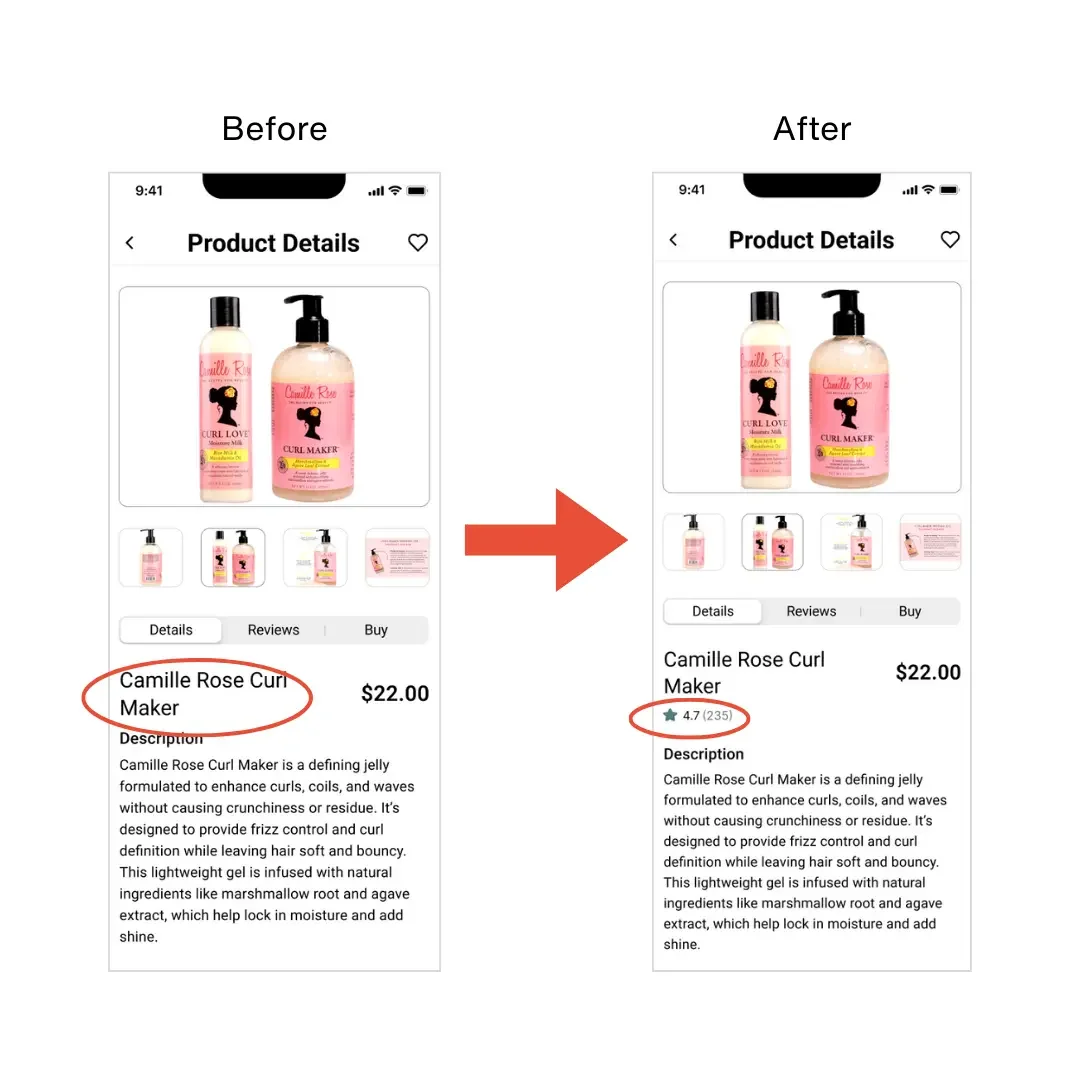
Product Details Page: Participants wanted product ratings included to help them make informed decisions before purchasing.
Redesign
Issue 1: Tutorials Page Filter
Before: Users wanted a way to filter the tutorials page. They wanted this to avoid feeling like one hair type/curl pattern was better than another.
After: A pill filter was added to the top of the tutorials page to avoid presenting different hair types/curl patterns as a hierarchy.
Issue 2: Product Reviews on Product Details Page
Before: Users relied solely on the product description, which felt incomplete. Users wanted to see how other users rated a product to inform the decision on whether or not they wanted to buy a product.
After: A new section was added to show product ratings (e.g., stars and number of reviews) right below the title of the product
By implementing these redesigns, CurlQuest became more intuitive and aligned with user needs, ensuring a smoother and more satisfying experience for curly-haired individuals navigating the app.
Reflection
Lessons Learned
his journey has been transformative, allowing me to merge my passion for user-centered design with a personal connection to curly hair care. This project was enriched by my research skills and my personal experience as someone with curly hair. My background in research taught me how to craft effective user interviews and synthesize findings into actionable insights. Additionally, my personal connection gave me a unique perspective, helping me empathize deeply with the users’ needs. This combination of professional expertise and personal passion made CurlQuest a project that felt both meaningful and impactful.
Working on CurlQuest taught me the importance of iterative design, from ideation to usability testing, and how listening to user feedback enhances functionality and overall experience. Features like tutorial filters and product reviews were directly influenced by user insights, highlighting how their voices drive meaningful design that puts the user’s voice at the center.Looking ahead, I plan to refine CurlQuest further and explore features like a community forum or live Q&A sessions with curl experts. This project solidified my belief in the value of research, empathy, and creativity in UX/UI design, and I’m excited to apply these lessons to future projects, continuously growing in this field.